
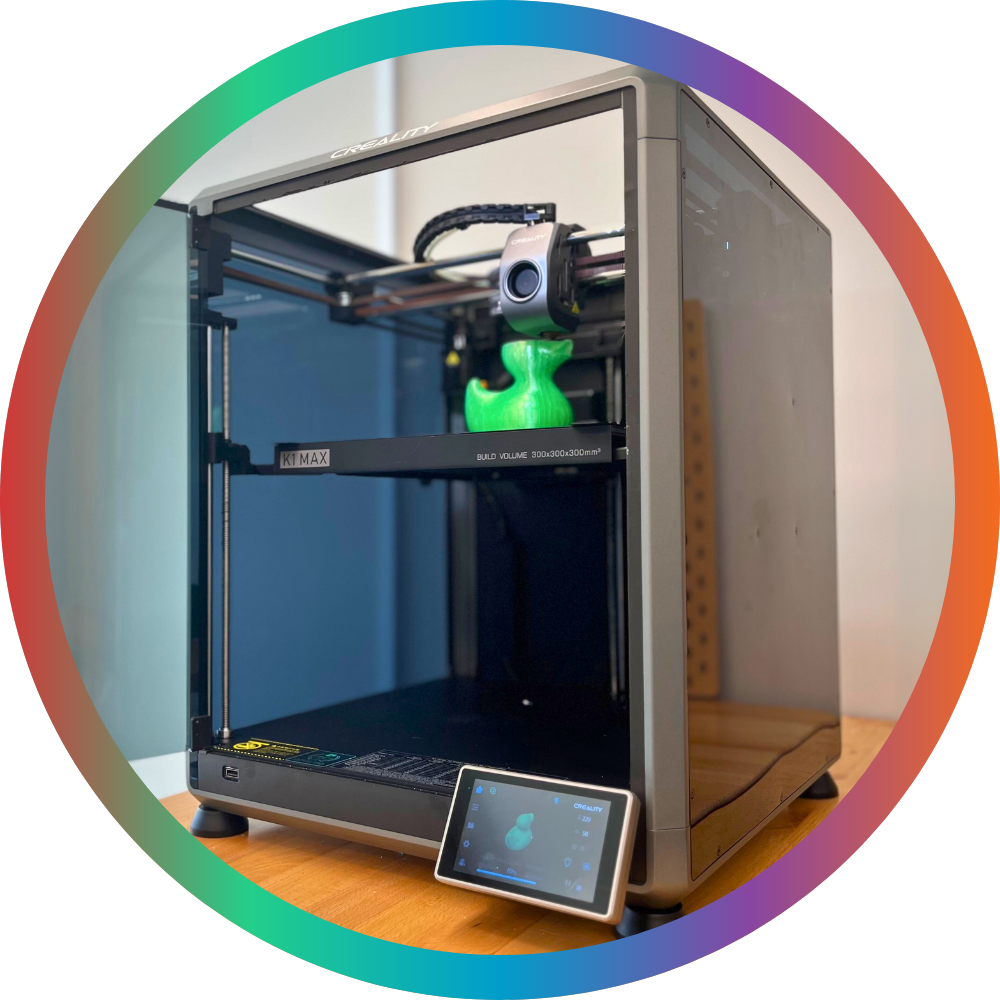
The Port Dover Branch 3D printer is the Creality K1 Max model.
This website uses cookies to enhance usability and provide you with a more personal experience. By using this website, you agree to our use of cookies as explained in our Privacy Policy.
3D Printer
The Port Dover Branch 3D printer is the Creality K1 Max model.
Prepare your print in Creality Print.
You can download your 3D model in the MakerSpace and insert it to Creality Print to prepare your print on site.
Or, you can prepare it in Creality Print ahead of time from your own device and export the G-code with all your print settings configured.
PLA Filament is available in a variety of colours on a cost recovery basis. Visit the Friends of the Library MakerSpace to see what options are currently available.
For material prices, visit the MakerSpaces page.
Patrons can book time on the 3D printer computer to prepare and queue their prints.
3D prints can take many hours. Reserving the 3D printer computer does not guarantee that the 3D printer will also be available at that time.
If the printer is available, you can start printing it right away.
If it is not, you can send your prepared print to the printer and then queue it with staff. To queue your print, tell staff the name of the print job you sent to the printer and which filament you would like to print it with.
Either way, leave your contact details with staff at the circulation desk so we can contact you when your print is complete.
Button Maker
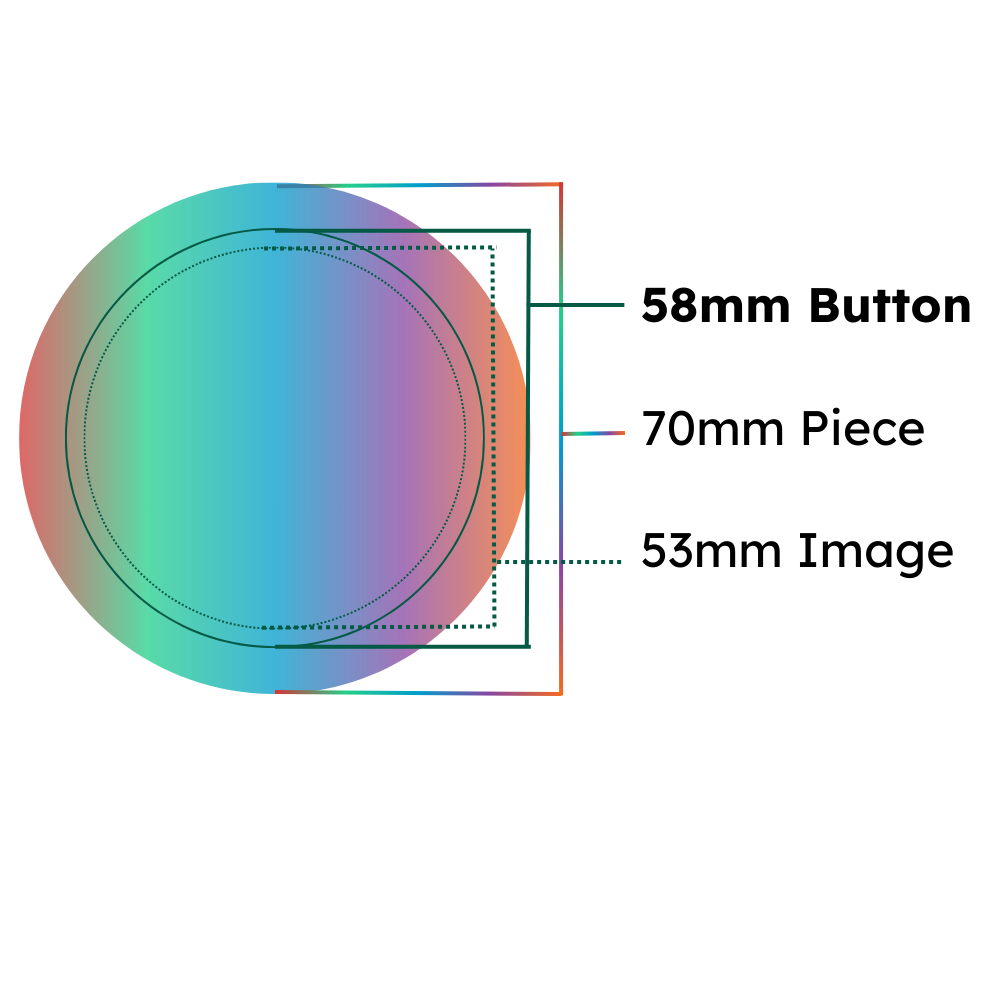
The Port Dover Branch has a 58mm button maker.
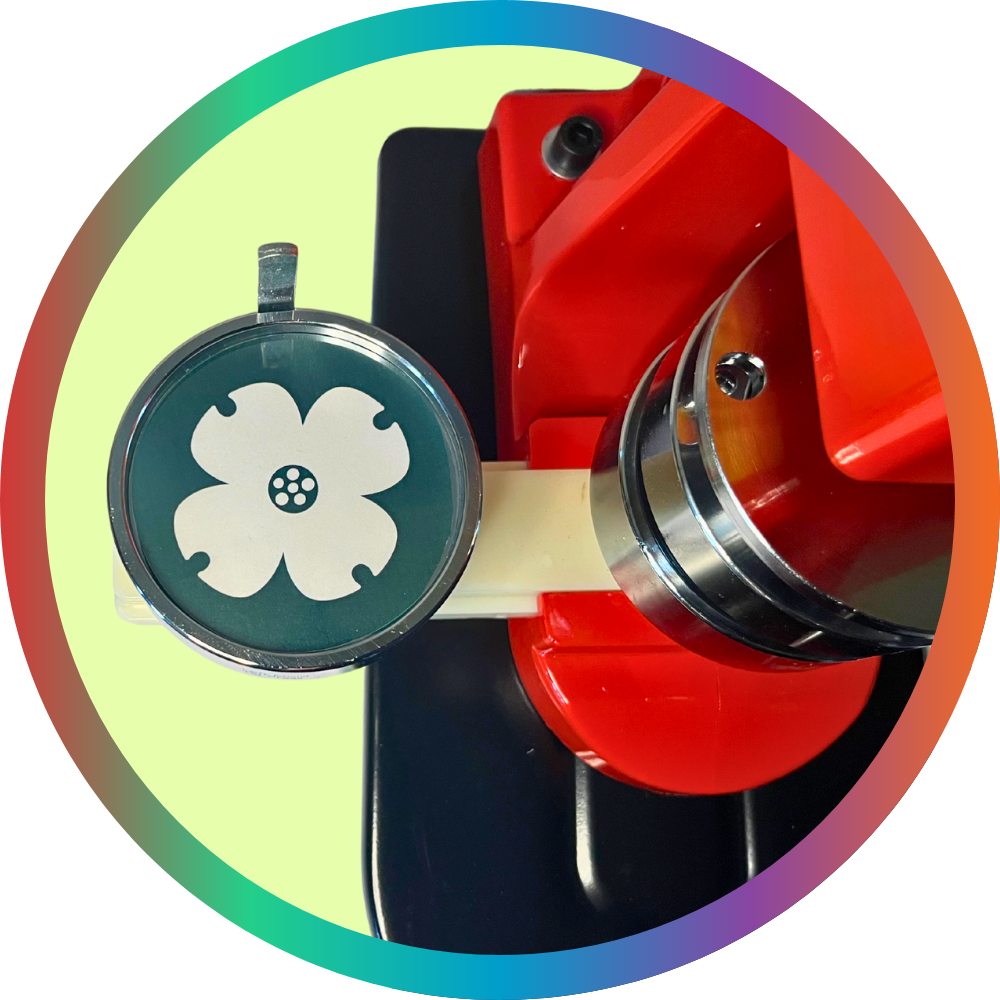
For a 58mm button:
For materials and prices, see the MakerSpaces page.
Cricut
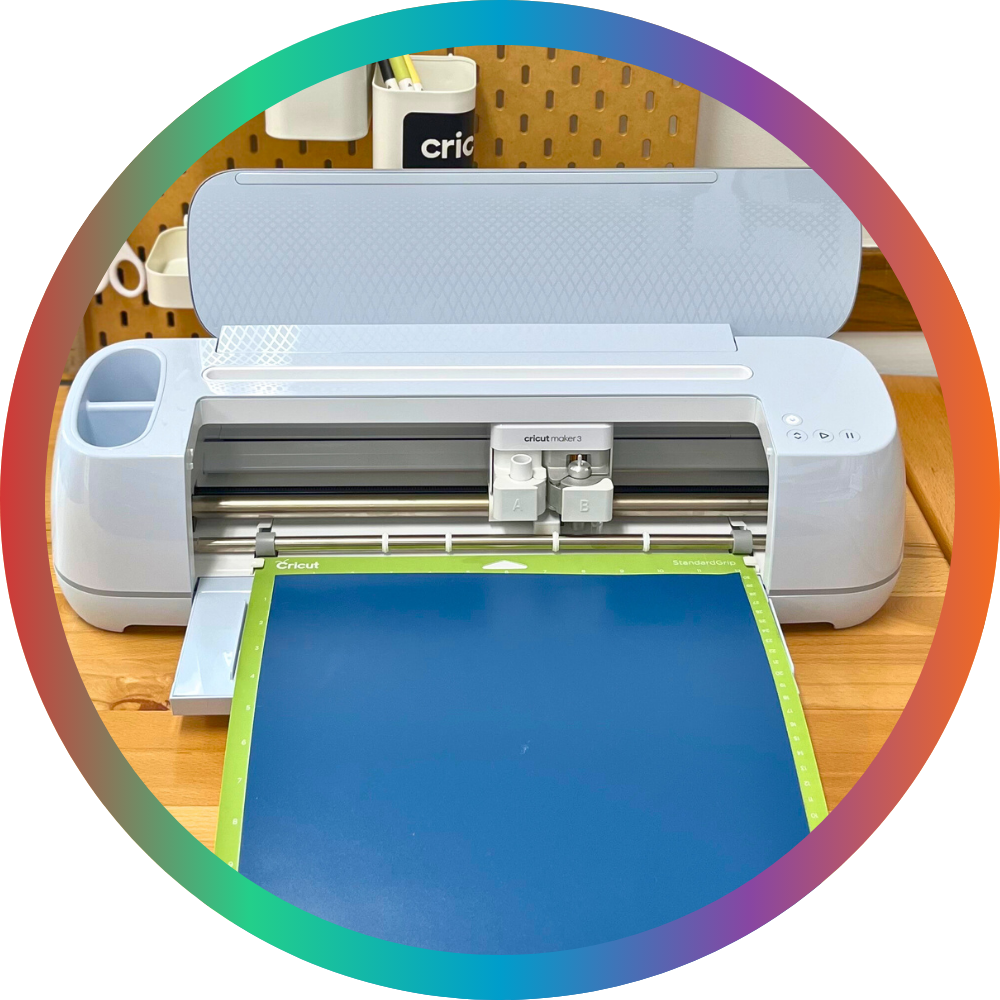
Each NCPL Branch has a Cricut Maker 3 available for patron use.
When preparing your project in Cricut Design Space, be sure your machine is set to Cricut Maker 3.
The Port Dover Branch has a 9" by 9" Cricut EasyPress with pressing mat and a mug press and available for patron use.
The EasyPress may be used to use to apply compatible materials to flat surfaces. Heat-transfer vinyl is provided in the MakerSpace on a cost-recover basis, or you may bring your own materials.
The mug press must be used with a sublimation-compatible mug and infusible ink, either in the form of infusible ink transfer sheets or infusible ink drawings on paper.
Patrons must supply their own infusible ink. These supplies are available directly from Cricut or in a variety of craft supply stores.
The Library does keep a supply of sublimation-compatible mugs in the MakerSpace on a cost recovery basis. Patrons may also supply their own mug, as long as it is compatible as a "blank" for sublimation transfer. If the coating on the mug is not appropriate for sublimation transfer, the design will not transfer to the mug. Cricut produces a variety of "mug blanks" in different sizes and styles available for direct purchase, and these can sometimes be found in craft stores from Cricut and other suppliers, too.
Be sure to use the appropriate temperature and timing settings for the material you are using.
The following machine tools are available to use with the Cricut:
We make every effort to replace worn out or damaged machine tools without any disruptions to service.
If you believe a machine tool needs to be replaced while you are using the Cricut, please inform one of our helpful staff right away.
Many Cricut materials must be loaded on to the machine on an adhesive mat.
The following mat types and sizes are available to use with the Cricut Maker 3 in Delhi at no cost:
Patrons may also bring their own Cricut Smart materials which can be loaded into the machine without a mat.
You may also bring your own Cricut mats, including specialty mats, as long as they are compatible with the Maker 3.
For materials and prices, see the MakerSpaces page.
Digitize
Digitize your print photos, slides, film negatives, and VHS home videos!
Scan your print photos, slides, and film negatives to JPEG or TIFF images! You can back up your scanned files to cloud storage or a hard drive, share them through email and social media, and use them to print copies.
Specifications
Scan photos on the reflective setting.
Scan original negatives on the film negative setting.
Scan slides on the film positive setting.
Note that resolution looks different on the screen than it would in print. A low resolution image can look clear larger on a screen than it would in print. Likewise, a high resolution image may be scaled down to fit the screen. Do not rely on the size of the image on the computer monitor to tell you "how big" the image is.
Print resolution is typically 300 to 600 dots per inch (DPI). If you may want to print a copy of your image at the same size, scan it at at least 300DPI. In order to scale up, including slides and film negatives, scan at a higher DPI. The dots per inch are measured linearly, from side to side or top to bottom. So scanning an image at 1200DPI could produce a print four times as wide and four times as tall without looking pixelated.
Increasing the resolution can lead to distortion and does result in longer scanning times and large file sizes. Choose the scanning resolution that best suits your original size and your needs.
NOTICE: The VHS to MP4 video conversion station is currently out of service. The maker kit version is available to borrow! To use the maker kit at home, you need a VCR and a Windows or Mac computer. When the MakerSpace station is back in service, you will be able to reserve it on this page.
Digitize your home VHS video tapes in the MakerSpace! The video capture device software captures the output from the VCR and records them in real time, then renders them into a complete video file.
Since the video is captured as the tape plays, this process will take as long as the video you want to digitize, plus a little extra time for setting up, rendering the video, and saving.
The video quality is dependent on the quality of the video on the tape.
The video files are often too large to send as an email attachment. Be sure to bring your own storage device such as a thumb drive, or be sure you will be able to log in to a cloud storage account from the public computer with your password and any applicable multi-factor authentication methods. All saved and downloaded files are automatically deleted from the public computers between sessions.
Reserve MakerSpace Access
You can reserve time in the MakerSpace right here!
Patrons may reserve time on any piece of equipment. You can also reserve access to the MakerSpace to use the space without using any of the reservable equipment.
Other patrons may be using the MakerSpace at the same time as you, whether using a different piece of equipment or using the space.
MakerSpace equipment or access must be reserved before it can be checked out, and it can only be checked out to the library card used to make the reservation.
To make a reservation, you must:
The patron who makes the reservation must be present at checkout, and is responsible for any guests they bring with them. Children may only use the MakerSpace when they are accompanied by an adult, and that adult must have a reservation with their library card.
The full MakerSpace terms of use will be presented as part of the reservation process. These terms must be accepted before the reservation can be completed.
Contact Us
Norfolk County Public Library
46 Colborne St. S.
Simcoe, Ontario N3Y 4H3
Phone: 519-426-3506
Fax: 519-426-0657
Locations and Hours